
Best 2001 to 5000 Mbps Routers in 2026: 15 Picks by Specs
The TP-Link Deco 7 Mesh Bundle is our top pick for routers in the 2001 to 5000 Mbps speed class. It pairs Wi-Fi 7 with four BE5000 nodes, including an outdoor unit, covers up to 9,000 sq ft, and adds multi-gig wired support, making it the fullest whole-home system in this speed class. The rest of this guide compares 15 picks from 28 speed-matched listings using their published specifications and the Wi-Fi Alliance's descriptions of Wi-Fi 6 and Wi-Fi 7. We did not test any unit.
15 picks from 42 routers that match this guide with a price we can quote today, made by 29 makers. Each price below is read live and stamped with the time it was read.
The short list
Who each pick suits
- For whole-home Wi-Fi 7: If you want Wi-Fi 7 across a large property with outdoor coverage, start with the Deco 7 Mesh Bundle. See pick 1
- For travel and mobile work: The GL.iNet Slate 7 gives you Wi-Fi 7 and a 2.5G port in a portable router, while the ASUS RT-AX57 GO adds 4G/5G tethering for working from anywhere. See pick 3
- For tinkerers and power users: The Cudy WR3000H is an AX3000 router with OpenWRT support and a 2.5G port for custom firmware and faster wired connections. See pick 6
- For large homes with Wi-Fi 6 clients: The TP-Link Deco X55 Pro is a three-pack Wi-Fi 6 mesh that spreads AX3000-class coverage through more rooms without moving to Wi-Fi 7. See pick 7
The 15 picks, one by one
1 Best overall

TP-Link Deco 7 Mesh Bundle
- Wi-Fi standard
- Wi-Fi 7
- Bands
- Dual-band
- Speed class
- 2001 to 5000
- Coverage
- Over 6,000 sq ft
- Pack size
- 3 pack or more
- Mesh
- Yes
- Multi-gig port
- Yes
$358.69 (as of 10/26/2026 20:06 PDT - Details)
The most capable pick here is a four-node Wi-Fi 7 mesh: three indoor BE5000 units, one outdoor unit and coverage up to 9,000 sq ft. No other pick combines outdoor coverage, four nodes and the newer Wi-Fi 7 generation in one system.
Pros
- Wi-Fi 7 with dual-band BE5000 speeds in the 2001 to 5000 Mbps range
- Four nodes cover the most square footage in this list
- Includes an outdoor node for patios or detached structures
- Multi-gig wired support is listed on the bundle
Cons
- Dual-band design, so wireless backhaul shares a band if you do not use wired backhaul
- Overkill for small apartments that need one router
- Listing does not state per-node Ethernet port details
Good fit if
- Large homes that need outdoor Wi-Fi 7 coverage
- Buyers who want one mesh system instead of several separate access points
Skip if
- You need a simple single router
- Your home is under 2,000 sq ft and you prefer one compact unit
Verdict: The Deco 7 Mesh Bundle is the best whole-home Wi-Fi 7 system in this 2001 to 5000 Mbps roundup.
2 Best 5 Gbps-class Wi-Fi 7 mesh system

Deco 7 Dual-Band BE5000 WiFi 7 Mesh Wi-Fi System 4-Stream 5 Gbps
- Wi-Fi standard
- Wi-Fi 7
- Bands
- Dual-band
- Speed class
- 2001 to 5000
- Coverage
- Over 6,000 sq ft
- Pack size
- 3 pack or more
- Mesh
- Yes
- Multi-gig port
- Yes
$208.73 (as of 10/26/2026 13:08 PDT - Details)
The Deco 7 Dual-Band lists a 5 Gbps combined speed on Wi-Fi 7 and supports mesh expansion. It is the pick if you want the Deco 7 platform without the four-node bundle's outdoor hardware.
Pros
- Listed 5 Gbps-class combined Wi-Fi 7 speed
- Mesh-ready and can be paired with additional Deco units
- Dual-band design keeps the node footprint small
- Built for the 2001 to 5000 Mbps speed band
Cons
- No coverage figure stated by the seller
- No multi-gig port listed
- Dual-band system does not include a dedicated wireless backhaul radio
Good fit if
- Homeowners who want Wi-Fi 7 mesh and plan to expand later
- Buyers who prefer a smaller mesh system without outdoor nodes
Skip if
- You need one node that covers a very large house immediately
- You require a tri-band mesh with a separate backhaul radio
Verdict: A compact, expandable Wi-Fi 7 mesh node for 2001 to 5000 Mbps networks.
3 Best travel Wi-Fi 7 router

GL.iNet GL-BE3600 Slate 7 Wi-Fi 7 Travel Router Touchscreen 2.5G
- Wi-Fi standard
- Wi-Fi 7
- Speed class
- 2001 to 5000
- Multi-gig port
- Yes
- Travel
- Yes
$159.99 (as of 10/26/2026 14:10 PDT - Details)
The Slate 7 packs Wi-Fi 7, a touchscreen and a 2.5G port into a travel-size router. It is the most future-proof mobile pick in this list because its Wi-Fi 7 radio and multi-gig wired port match the best home routers here.
Pros
- Wi-Fi 7 in a portable travel router
- 2.5G port listed for faster wired connections
- Touchscreen interface is unique among the travel picks
- BE3600 speed tier fits the 2001 to 5000 Mbps range
Cons
- No mesh capability listed
- Travel routers usually cover a smaller area than a full-size home router
- No coverage figure stated by the seller
Good fit if
- Remote workers who need Wi-Fi 7 in hotels or short-term rentals
- Travelers who also want a 2.5G port for a temporary wired network
Skip if
- You need a whole-home mesh system
- You prefer a router with integrated cellular failover
Verdict: The Slate 7 is the most capable travel router in this 2001 to 5000 Mbps group.
4 Best tri-band Wi-Fi 6 mesh

NETGEAR Orbi Whole Home Tri-Band Mesh WiFi 6 System
- Wi-Fi standard
- Wi-Fi 6
- Bands
- Tri-band
- Speed class
- 2001 to 5000
- Coverage
- 2,001 to 4,000 sq ft
- Mesh
- Yes
$177.99 (as of 10/26/2026 17:11 PDT - Details)
The Orbi RBK652S is a two-piece tri-band Wi-Fi 6 mesh with coverage up to 4,000 sq ft. Its dedicated tri-band design separates the wireless backhaul from client traffic, which is valuable when you cannot wire the satellite back to the router.
Pros
- Tri-band Wi-Fi 6 with a dedicated backhaul radio
- Router plus satellite covers up to 4,000 sq ft
- Built-in security features are listed by the seller
- Whole-home mesh is ready out of the box
Cons
- Only one satellite is included
- No multi-gig port listed
- No support for the newer 6 GHz band
Good fit if
- Homes up to 4,000 sq ft with Wi-Fi 6 clients
- Buyers who want a tri-band mesh without running Ethernet between nodes
Skip if
- You already own a tri-band Wi-Fi 5 mesh and can wait for Wi-Fi 7
- You need outdoor mesh coverage
Verdict: A solid tri-band Wi-Fi 6 mesh for homes that prefer wireless backhaul.
5 Best travel router with cellular tethering

ASUS RT-AX57 GO -AX3000 Dual Band WiFi 6 Portable Travel Router
- Wi-Fi standard
- Wi-Fi 6
- Bands
- Dual-band
- Speed class
- 2001 to 5000
- Travel
- Yes
$99.00 (as of 10/26/2026 12:09 PDT - Details)
The ASUS RT-AX57 GO is a Wi-Fi 6 travel router that lists 4G/5G tethering and public Wi-Fi WISP mode. It is the best pick when you need route sharing from a phone hotspot or an existing public connection.
Pros
- Wi-Fi 6 in a portable AX3000 travel router
- 4G/5G tethering listed for on-the-go connections
- Public Wi-Fi WISP mode lets it extend a hotel network
- Dual-band AX3000 speed fits the 2001 to 5000 Mbps class
Cons
- No multi-gig port listed
- No mesh capability listed
- Travel-size routers typically have shorter range than full-size models
Good fit if
- Travelers who want to share a phone's data connection
- People staying in hotels with limited public Wi-Fi
Skip if
- You need a dedicated 5G SIM slot in the router
- You want a Wi-Fi 7 travel router
Verdict: A practical Wi-Fi 6 travel router for hotspot sharing and hotel Wi-Fi extension.
6 Best OpenWRT router with 2.5G port

Cudy AX3000 5-Port Wi-Fi 6 2.5G Router
- Wi-Fi standard
- Wi-Fi 6
- Speed class
- 2001 to 5000
- Mesh
- Yes
- Multi-gig port
- Yes
$69.99 (as of 10/26/2026 13:08 PDT - Details)
The Cudy WR3000H combines AX3000 Wi-Fi 6, a 2.5G port and OpenWRT support in a compact router. OpenWRT is listed in the product name, and the 2.5G port makes it a strong match for fast wired broadband plans in this speed class.
Pros
- OpenWRT support is listed, enabling custom firmware
- 2.5G port adds a faster wired uplink than standard Gigabit routers
- Dual-band AX3000 Wi-Fi 6
- Four Gigabit Ethernet ports for wired devices
Cons
- No mesh capability listed
- No coverage figure stated by the seller
- OpenWRT setup may not suit users who want only factory firmware
Good fit if
- Users who plan to run custom firmware
- People with faster-than-Gigabit wired internet plans
Skip if
- You want a mesh system with easy app management
- You prefer a router with built-in parental controls on the stock firmware
Verdict: A capable OpenWRT-friendly router with a 2.5G port for the 2001 to 5000 Mbps class.
7 Best three-pack Wi-Fi 6 mesh

TP-Link Deco X55 Pro AX3000 Whole Home Wi-Fi 6 Mesh System
- Wi-Fi standard
- Wi-Fi 6
- Speed class
- 2001 to 5000
- Coverage
- Over 6,000 sq ft
- Pack size
- 3 pack or more
- Mesh
- Yes
- Multi-gig port
- Yes
$169.95 (as of 10/26/2026 20:06 PDT - Details)
The Deco X55 Pro gives you three AX3000 Wi-Fi 6 nodes in one pack. It is the simplest way to cover a whole home with Wi-Fi 6 when you do not need Wi-Fi 7 yet.
Pros
- Three Wi-Fi 6 mesh nodes cover more rooms than a single router
- AX3000 speed class fits the 2001 to 5000 Mbps band
- Mesh system can be expanded with additional Deco units
- Multiple nodes reduce dead zones in larger homes
Cons
- No coverage figure stated by the seller
- No multi-gig port listed
- Dual-band mesh does not have a dedicated wireless backhaul radio
Good fit if
- Homeowners who want a three-node Wi-Fi 6 mesh
- Buyers who prefer a manufacturer app over manual configuration
Skip if
- You already have a single strong Wi-Fi 6 router and need no extra coverage
- You want Wi-Fi 7 for new clients
Verdict: A dependable three-pack Wi-Fi 6 mesh for whole-home coverage in this speed class.
8 Best dual-band Wi-Fi 7 mesh for medium homes

Tenda WiFi 7 Mesh System BE3600
- Wi-Fi standard
- Wi-Fi 7
- Bands
- Dual-band
- Speed class
- 2001 to 5000
- Coverage
- 4,001 to 6,000 sq ft
- Pack size
- 2 pack
- Mesh
- Yes
$129.99 (as of 10/26/2026 20:05 PDT - Details)
The Tenda BE3600 mesh is a two-pack Wi-Fi 7 system with coverage up to 4,600 sq ft. It offers the newer Wi-Fi generation in a compact dual-band package and is a simpler path to Wi-Fi 7 than adding more nodes.
Pros
- Wi-Fi 7 dual-band mesh system
- Two-pack covers up to 4,600 sq ft
- Seamless mesh is listed for roaming between nodes
- BE3600 speed tier places it in the 2001 to 5000 Mbps class
Cons
- Dual-band system lacks a dedicated backhaul band
- No multi-gig port listed
- No tri-band option for very congested wireless environments
Good fit if
- Medium-sized homes that want Wi-Fi 7 without many nodes
- Buyers who want a Wi-Fi 7 mesh with straightforward two-pack setup
Skip if
- You need outdoor mesh coverage
- You prefer a tri-band mesh for wireless backhaul
Verdict: A straightforward two-pack Wi-Fi 7 mesh for homes around 4,600 sq ft.
9 Best gaming-oriented single router

NETGEAR Nighthawk WiFi 6 Router
- Wi-Fi standard
- Wi-Fi 6
- Bands
- Dual-band
- Speed class
- 2001 to 5000
- Coverage
- Up to 2,000 sq ft
- Gaming
- Yes
The Nighthawk RAX36 is an AX3000 Wi-Fi 6 router listed for gaming, with dual-band Gigabit and coverage up to 2,000 sq ft. It is a simpler single-router choice for gamers who do not want to build a mesh system.
Pros
- Listed as a gaming router with Wi-Fi 6
- AX3000 speed class matches the 2001 to 5000 Mbps band
- Single router covers up to 2,000 sq ft
- Dual-band Gigabit design keeps the setup compact
Cons
- No multi-gig port listed
- No mesh capability listed
- Coverage is lower than the three-pack mesh picks
Good fit if
- Gamers who want one powerful router near the console
- Apartments or rooms up to 2,000 sq ft
Skip if
- You need whole-home coverage beyond 2,000 sq ft
- You want a Wi-Fi 7 router for future devices
Verdict: A reliable single Wi-Fi 6 gaming router for smaller spaces.
10 Best tri-band Wi-Fi 6E mesh

TP-Link Deco XE70 Pro AXE4900 Tri-Band WiFi 6E Mesh WiFi System
- Wi-Fi standard
- Wi-Fi 6E
- Bands
- Tri-band
- Speed class
- 2001 to 5000
- Coverage
- Over 6,000 sq ft
- Pack size
- 3 pack or more
- Mesh
- Yes
- Multi-gig port
- Yes
$299.99 (as of 10/26/2026 20:06 PDT - Details)
The Deco XE70 Pro is a three-pack tri-band Wi-Fi 6E mesh with an AXE4900 speed tier. It is the only 6E pick in this roundup and the best choice if you have Wi-Fi 6E devices that can use the 6 GHz band.
Pros
- Tri-band Wi-Fi 6E with a 6 GHz radio
- Three-pack mesh covers more rooms than a single 6E router
- AXE4900 speed tier places it in the 2001 to 5000 Mbps class
- Tri-band design frees a band for wireless backhaul
Cons
- No coverage figure stated by the seller
- No multi-gig port listed
- Wi-Fi 6E requires clients that support the 6 GHz band
Good fit if
- Homes with Wi-Fi 6E laptops, phones or tablets
- Buyers who want a tri-band mesh without moving to Wi-Fi 7
Skip if
- Your devices are all Wi-Fi 6 or older
- You prefer the longer-term support of Wi-Fi 7
Verdict: A three-pack Wi-Fi 6E mesh for homes ready to use the 6 GHz band.
11 Best cellular gateway with Wi-Fi 6
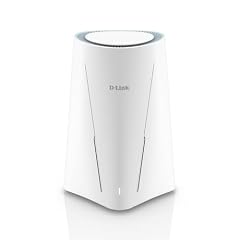
G530 5G NR AX3000 WiFi 6 Router with SIM Card Slot
- Wi-Fi standard
- Wi-Fi 6
- Speed class
- 2001 to 5000
- 4G or 5G
- Yes
$388.45 (as of 10/26/2026 14:08 PDT - Details)
The D-Link G530 is a 5G NR AX3000 router with a SIM card slot, cellular gateway functions and dual-WAN failover. It is the best pick when a fixed broadband connection is not always available and you want a router that can fall back to 5G.
Pros
- 5G NR cellular support with a SIM card slot
- AX3000 Wi-Fi 6 in the 2001 to 5000 Mbps speed class
- Dual-WAN failover is listed for backup connectivity
- High-gain antennas are listed for cellular reception
Cons
- No mesh capability listed
- No explicit coverage figure for the Wi-Fi side stated by the seller
- Cellular speeds depend on carrier signal and data plan
Good fit if
- Homes or offices that need a 5G backup connection
- Locations where wired broadband is slow or unavailable
Skip if
- You already have reliable wired broadband
- You want a mesh system instead of a single gateway
Verdict: A feature-rich 5G-capable router for locations that need cellular failover.
12 Best wide-coverage Wi-Fi 5 mesh
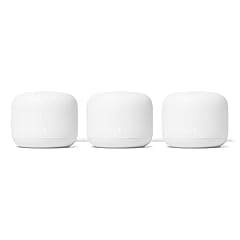
Google Nest WiFi Router 3 Pack
- Wi-Fi standard
- Wi-Fi 5
- Speed class
- 2001 to 5000
- Coverage
- Over 6,000 sq ft
- Pack size
- 3 pack or more
- Mesh
- Yes
$391.12 (as of 10/26/2026 15:05 PDT - Details)
The Google Nest WiFi 3-pack is an AC2200 mesh system with coverage up to 6,600 sq ft. It is the best pick here when maximizing coverage area matters more than upgrading to Wi-Fi 6 or 7.
Pros
- Three-pack covers up to 6,600 sq ft
- AC2200 speed class is listed in the 2001 to 5000 Mbps range
- Mesh network is designed for whole-home coverage
- Large-home use case is clearly stated in the listing
Cons
- Uses Wi-Fi 5, the oldest Wi-Fi generation in this roundup
- No multi-gig port listed
- Tri-band or 6 GHz features are not available
Good fit if
- Large homes where coverage area is a top priority
- Buyers with mostly Wi-Fi 5 or older clients
Skip if
- You want Wi-Fi 7 for current or future devices
- You need a router with advanced wired networking features
Verdict: A wide-coverage Wi-Fi 5 mesh if you value range over the latest Wi-Fi generation.
13 Best multi-mode Wi-Fi 6 router

Cudy AX3000 4-Port GbE Wi-Fi 6 Router
- Wi-Fi standard
- Wi-Fi 6
- Speed class
- 2001 to 5000
- Coverage
- Up to 2,000 sq ft
- Mesh
- Yes
$49.99 (as of 10/26/2026 13:08 PDT - Details)
The Cudy WR3000 V2.0 lists five operating modes including mesh, making it a flexible Wi-Fi 6 router with four Gigabit ports. It works as a regular router, repeater or mesh node depending on how you configure it.
Pros
- Five operating modes are listed, including mesh
- AX3000 Wi-Fi 6 speed class
- Four Gigabit Ethernet ports for wired devices
- Compact desktop design
Cons
- No coverage figure stated by the seller
- No multi-gig port listed
- No outdoor or cellular options
Good fit if
- Users who want one device that can act as router, repeater or mesh node
- Small homes that need a wired switch built into the router
Skip if
- You want a dedicated whole-home mesh system with app management
- You need Wi-Fi 7 or a 2.5G port
Verdict: A versatile multi-mode Wi-Fi 6 router for flexible network setups.
14 Best Wi-Fi 6 router for later mesh expansion

ASUS RT-AX3000S Dual Band WiFi 6 Extendable Router
- Wi-Fi standard
- Wi-Fi 6
- Bands
- Dual-band
- Speed class
- 2001 to 5000
$89.99 (as of 10/26/2026 12:09 PDT - Details)
The ASUS RT-AX3000S is a dual-band Wi-Fi 6 router with AiMesh support, so it can work alone and later be combined with other AiMesh routers. It also lists Instant Guard VPN and parental scheduling features.
Pros
- AiMesh support lets you expand into a mesh network later
- AX3000 Wi-Fi 6 speed class
- Instant Guard VPN is listed for secure remote access
- Parental control scheduling is built into the listing
Cons
- No multi-gig port listed
- No coverage figure stated by the seller
- Dual-band design shares a single 5 GHz radio for clients and backhaul
Good fit if
- Buyers who want a single router now and mesh expansion later
- Families that need parental scheduling controls
Skip if
- You need Wi-Fi 7 now
- You prefer a ready-made mesh kit with multiple nodes included
Verdict: A flexible single Wi-Fi 6 router with a clear path to AiMesh expansion.
15 Best two-pack Wi-Fi 7 mesh upgrade

TP-Link Deco 7 BE23 Dual-Band BE3600 WiFi 7 Mesh Wi-Fi System
- Wi-Fi standard
- Wi-Fi 7
- Bands
- Dual-band
- Speed class
- 2001 to 5000
- Coverage
- 4,001 to 6,000 sq ft
- Pack size
- 2 pack
- Mesh
- Yes
- Multi-gig port
- Yes
$154.99 (as of 10/26/2026 20:06 PDT - Details)
The Deco 7 BE23 two-pack is a dual-band Wi-Fi 7 mesh system for households that want a small multi-node setup without a full four-node bundle. It brings Wi-Fi 7 to more rooms than a single router while keeping the node count low.
Pros
- Two Wi-Fi 7 mesh nodes in one pack
- Dual-band BE3600 speed tier fits the 2001 to 5000 Mbps class
- Mesh system expands with additional Deco units
- More approachable than a four-node bundle for medium homes
Cons
- No coverage figure stated by the seller
- No multi-gig port listed
- Dual-band mesh lacks a dedicated backhaul band
Good fit if
- Medium-sized homes that want a two-node Wi-Fi 7 mesh
- Buyers who want room to expand later
Skip if
- You need outdoor mesh coverage
- You want a tri-band Wi-Fi 7 mesh with a dedicated backhaul radio
Verdict: A practical two-pack Wi-Fi 7 mesh for smaller whole-home upgrades.
Comparison table
| # | Router | Wi-Fi standard | Bands | Speed class | Coverage | Pack size | Mesh |
|---|---|---|---|---|---|---|---|
| 1 | TP-Link Deco 7 Mesh Bundle | Wi-Fi 7 | Dual-band | 2001 to 5000 | Over 6,000 sq ft | 3 pack or more | Yes |
| 2 | Deco 7 Dual-Band BE5000 WiFi 7 Mesh Wi-Fi System 4-Stream 5 Gbps | Wi-Fi 7 | Dual-band | 2001 to 5000 | Over 6,000 sq ft | 3 pack or more | Yes |
| 3 | GL.iNet GL-BE3600 Slate 7 Wi-Fi 7 Travel Router Touchscreen 2.5G | Wi-Fi 7 | not stated | 2001 to 5000 | not stated | not stated | not stated |
| 4 | NETGEAR Orbi Whole Home Tri-Band Mesh WiFi 6 System | Wi-Fi 6 | Tri-band | 2001 to 5000 | 2,001 to 4,000 sq ft | not stated | Yes |
| 5 | ASUS RT-AX57 GO -AX3000 Dual Band WiFi 6 Portable Travel Router | Wi-Fi 6 | Dual-band | 2001 to 5000 | not stated | not stated | not stated |
| 6 | Cudy AX3000 5-Port Wi-Fi 6 2.5G Router | Wi-Fi 6 | not stated | 2001 to 5000 | not stated | not stated | Yes |
| 7 | TP-Link Deco X55 Pro AX3000 Whole Home Wi-Fi 6 Mesh System | Wi-Fi 6 | not stated | 2001 to 5000 | Over 6,000 sq ft | 3 pack or more | Yes |
| 8 | Tenda WiFi 7 Mesh System BE3600 | Wi-Fi 7 | Dual-band | 2001 to 5000 | 4,001 to 6,000 sq ft | 2 pack | Yes |
| 9 | NETGEAR Nighthawk WiFi 6 Router | Wi-Fi 6 | Dual-band | 2001 to 5000 | Up to 2,000 sq ft | not stated | not stated |
| 10 | TP-Link Deco XE70 Pro AXE4900 Tri-Band WiFi 6E Mesh WiFi System | Wi-Fi 6E | Tri-band | 2001 to 5000 | Over 6,000 sq ft | 3 pack or more | Yes |
| 11 | G530 5G NR AX3000 WiFi 6 Router with SIM Card Slot | Wi-Fi 6 | not stated | 2001 to 5000 | not stated | not stated | not stated |
| 12 | Google Nest WiFi Router 3 Pack | Wi-Fi 5 | not stated | 2001 to 5000 | Over 6,000 sq ft | 3 pack or more | Yes |
| 13 | Cudy AX3000 4-Port GbE Wi-Fi 6 Router | Wi-Fi 6 | not stated | 2001 to 5000 | Up to 2,000 sq ft | not stated | Yes |
| 14 | ASUS RT-AX3000S Dual Band WiFi 6 Extendable Router | Wi-Fi 6 | Dual-band | 2001 to 5000 | not stated | not stated | not stated |
| 15 | TP-Link Deco 7 BE23 Dual-Band BE3600 WiFi 7 Mesh Wi-Fi System | Wi-Fi 7 | Dual-band | 2001 to 5000 | 4,001 to 6,000 sq ft | 2 pack | Yes |
How this list was made
We built this guide from 28 speed-matched listings in the 2001 to 5000 Mbps class. We removed near-duplicate configurations so each model appears once, then kept the 15 entries that best cover the ways this speed class is used: Wi-Fi 7 upgrades, whole-home mesh, single routers, travel routers, cellular gateways and multi-gig wired options. Specs such as Wi-Fi generation, band count, pack size, coverage, travel or cellular features and multi-gig ports come from each listing. Prices shown on this page are read live from the store listing at their displayed time, so this text does not quote prices. The routers were not tested by this site; picks are based on stated specifications and the Wi-Fi Alliance's published feature descriptions.
Choosing the right one
What the 2001 to 5000 Mbps speed class means
Routers in this class are labeled with combined Wi-Fi speeds between 2001 and 5000 Mbps. That number is normally the sum of all bands, not the speed a single device will get. A dual-band AX3000 router, for example, may combine a 574 Mbps 2.4 GHz band and a 2402 Mbps 5 GHz band. A tri-band AXE4900 adds a third band, often a 1201 Mbps 6 GHz band, on top of its AX3600 base. Use the speed class as a general indicator of capacity rather than a guarantee for one device.
Wi-Fi 6 versus Wi-Fi 7 in this speed range
Wi-Fi 6 introduced technologies such as OFDMA, multi-user MIMO and 1024 QAM to improve efficiency in dense networks. Wi-Fi 7 builds on that with 320 MHz channels in the 6 GHz band, multi-link operation and 4K QAM. The Wi-Fi Alliance describes Wi-Fi 7 as delivering higher throughput, lower latency and greater reliability for demanding applications. In a 2001 to 5000 Mbps router, Wi-Fi 7 matters most if you have newer clients and want the best possible performance on the 6 GHz band. If most of your devices are older, a well-placed Wi-Fi 6 router can still be a strong match.
Mesh systems versus a single router
A mesh system includes two or more nodes that share one network name and let you roam between them. This is the best approach for whole-home coverage, especially in houses with more than 2,000 sq ft or multiple floors. Single routers are simpler and cheaper but their coverage is limited to the area around the router. In this roundup, mesh picks range from two-node kits to four-node bundles with outdoor units. Look at the stated coverage, the number of nodes, and whether the system includes a dedicated tri-band radio for wireless backhaul.
Travel and cellular routers in the 2001 to 5000 Mbps class
Some routers in this speed class are built for travel. They are smaller, may run from USB power and can connect to hotel Wi-Fi or a phone hotspot. The ASUS RT-AX57 GO and TP-Link Roam series are examples. Other picks are cellular gateways with a SIM card slot, such as the D-Link G530 and Cudy 5G models. Those are less about portability and more about providing a connection where wired broadband is unreliable. If you need failover when your cable or fiber drops, a dual-WAN cellular router can be a better fit than a simple travel router.
Ports and multi-gig wired connections
The 2001 to 5000 Mbps class covers routers that may use Gigabit Ethernet, 2.5G ports or additional wired switch ports. Multi-gig ports, often 2.5G Ethernet, matter if your internet plan is faster than 1 Gbps or you run a NAS on your local network. Most routers in this price range still use Gigabit ports, so check the listing before buying. If you need faster wired connections, look for a model with a 2.5G port, such as the GL.iNet Slate 7 or Cudy WR3000H. Otherwise, Gigabit Ethernet is enough for most home use.
Questions
Will a 2001 to 5000 Mbps router make my internet plan faster?
No. A router cannot make your internet service faster than the plan you buy from your provider. The router's speed class shows the maximum combined Wi-Fi capacity it can offer to devices on your local network. If your internet plan is 500 Mbps, even a 2001 to 5000 Mbps router will only deliver up to the plan's speed. The larger speed number helps when many devices share the connection or when you transfer files within your home network.
Do I need a Wi-Fi 7 router for a 2001 to 5000 Mbps connection?
Only if you have Wi-Fi 7 devices and want the latest features. The Wi-Fi Alliance says Wi-Fi 7 delivers higher throughput and lower latency with features like 320 MHz channels and multi-link operation. But a Wi-Fi 6 router can still handle most home traffic well, especially if your internet plan is below the multi-gig range. Choose Wi-Fi 7 when you want to be ready for new devices, not because the router's speed label is higher.
What is the difference between dual-band and tri-band mesh in this speed class?
Dual-band mesh uses one 2.4 GHz and one 5 GHz radio for both client traffic and backhaul between nodes. Tri-band mesh adds a third radio, often a dedicated 5 GHz or 6 GHz band, for backhaul. That leaves the other bands free for phones, laptops and streaming devices. Tri-band mesh can be more consistent when you cannot connect nodes with a wired Ethernet cable. Dual-band mesh is fine for smaller homes or when you can wire the backhaul.
Why do some travel routers in this class list 4G/5G tethering?
Travel routers with 4G/5G tethering can share a smartphone's cellular connection with multiple devices. Instead of connecting each device to your phone's hotspot, you connect the router to the phone over USB or Wi-Fi and let the router create its own network. That can improve range and let you use features like a VPN or public Wi-Fi extension. It is different from a cellular gateway, which takes a SIM card directly and does not rely on a phone.
Which security features should I look for in a 2001 to 5000 Mbps router?
Look for support for WPA3, which the Wi-Fi Alliance says protects against password guessing and requires Protected Management Frames. Many routers also list built-in antivirus, parental controls or VPN support. For home use, at least WPA2/WPA3 support is important. If you share internet with guests, a separate guest network is useful. The exact security tools vary by model, so check the router's listed specifications before buying.
What changed
- : First published.