
Best Dual-Band Routers in 2026: 15 Picks Compared on Specs
The TP-Link Deco 7 BE5000 is the best dual-band router for most homes: it is a Wi-Fi 7 mesh system with a 2001 to 5000 Mbps speed class, so you get current-generation wireless and whole-home coverage from one product family. The 15 picks below are chosen from the catalogue on the basis of stated specs and standards information. Nobody on the site has tested these units.
14 picks from 67 routers that match this guide with a price we can quote today, made by 29 makers. Each price below is read live and stamped with the time it was read.
The short list
Who each pick suits
- For gaming on a fast dual-band network: Choose the ASUS TUF Gaming BE6500 if you want Wi-Fi 7, a high speed class, and gaming features without adding a third band. See pick 2
- For travel and hotel networks: The GL.iNet Beryl 7 is a Wi-Fi 7 travel router, while the ASUS RT-AX57 GO adds 4G/5G tethering and a public Wi-Fi mode. See pick 3
- For custom router firmware: The Cudy AX3000 2.5G lists OpenWRT in the product name and includes a multigig port, which makes it a strong candidate for users who want to control the firmware. See pick 8
The 14 picks, one by one
1 Best overall

Deco 7 Dual-Band BE5000 WiFi 7 Mesh Wi-Fi System 4-Stream 5 Gbps
- Wi-Fi standard
- Wi-Fi 7
- Bands
- Dual-band
- Speed class
- 2001 to 5000
- Coverage
- Over 6,000 sq ft
- Pack size
- 3 pack or more
- Mesh
- Yes
- Multi-gig port
- Yes
$208.73 (as of 10/26/2026 13:08 PDT - Details)
The TP-Link Deco 7 BE5000 combines Wi-Fi 7, a speed class of 2001 to 5000 Mbps, and mesh support in a dual-band system. It is the most balanced pick for a home that wants current-generation wireless and the ability to expand coverage.
Pros
- Wi-Fi 7 mesh system
- Speed class 2001 to 5000 Mbps
- Mesh support for whole-home coverage
- Dual-band: 2.4 GHz and 5 GHz
Cons
- No coverage claim stated by the seller
- No multigig port listed
Good fit if
- Homes that want Wi-Fi 7 without adding a third band
- People who want an expandable mesh system
Skip if
- You need a stated outdoor-capable unit; the eero Outdoor 7 is the better fit
- You need a 2.5G Ethernet port; the ASUS RT-BE59 is the better fit
Verdict: The TP-Link Deco 7 BE5000 is the most balanced dual-band mesh system in this list.
2 Best gaming router

ASUS TUF Gaming BE6500 WiFi 7 Router
- Wi-Fi standard
- Wi-Fi 7
- Bands
- Dual-band
- Speed class
- 5001 to 10000
- Mesh
- Yes
- Multi-gig port
- Yes
- Gaming
- Yes
$195.00 (as of 10/26/2026 12:09 PDT - Details)
The ASUS TUF Gaming BE6500 is one of the fastest routers here with a 5001 to 10000 Mbps speed class. It lists gaming as a use case, includes mesh support, and uses Wi-Fi 7, which makes it a direct fit for a gaming network.
Pros
- Speed class 5001 to 10000 Mbps
- Game Accelerator listed in the product name
- Mesh support included
- Dual-band Wi-Fi 7
Cons
- No coverage claim stated by the seller
- No multigig port listed
Good fit if
- Gamers who want Wi-Fi 7 in a dual-band router
- Users who may add mesh nodes later
Skip if
- You need an outdoor-capable unit
- You need a 2.5G port for a wired multigig network
Verdict: The ASUS TUF Gaming BE6500 is the strongest gaming-focused dual-band Wi-Fi 7 router here.
3 Best travel router

GL.iNet GL-MT3600BE Beryl 7 Dual-Band Wi-Fi 7 Travel Router
- Wi-Fi standard
- Wi-Fi 7
- Bands
- Dual-band
- Multi-gig port
- Yes
- Travel
- Yes
$129.99 (as of 10/26/2026 14:10 PDT - Details)
The GL.iNet Beryl 7 is a Wi-Fi 7 travel router with a dual-band layout and a travel use case listed in the catalogue. It gives travelers a current-generation router they can carry instead of relying on hotel or rental equipment.
Pros
- Wi-Fi 7 in a travel router
- Travel use case listed by the seller
- Dual-band operation for 2.4 GHz and 5 GHz
Cons
- Speed class not stated by the seller
- No mesh support listed
Good fit if
- Travelers who want current-generation Wi-Fi
- People who need a router to pack in a bag
Skip if
- You need whole-home mesh coverage
- You need a stated 2.5G port
Verdict: The GL.iNet Beryl 7 is the best current-generation travel router in this list.
4 Best outdoor mesh system

Amazon eero Outdoor 7 dual-band mesh wifi system
- Wi-Fi standard
- Wi-Fi 7
- Bands
- Dual-band
- Coverage
- Over 6,000 sq ft
- Pack size
- 2 pack
- Mesh
- Yes
$679.98 (as of 10/26/2026 22:46 PDT - Details)
The eero Outdoor 7 is the only pick in this list with a stated IP66 weatherproof designation. The two-pack covers over 6,000 sq ft according to the catalogue, so it fits yards, garages, and outbuildings.
Pros
- Weatherproof designation of IP66 listed
- Two-unit pack
- Coverage stated over 6,000 sq ft
- Dual-band mesh system
Cons
- Wi-Fi generation is not stated in the catalogue entry
- No speed class is stated by the seller
Good fit if
- Homes with outdoor Wi-Fi needs
- People who want mesh coverage across a large property
Skip if
- You only need an indoor router
- You need a stated Wi-Fi 7 or Wi-Fi 6 class
Verdict: The eero Outdoor 7 is the pick for weather-exposed coverage.
5 Best Wi-Fi 7 router with a 2.5G port

ASUS RT-BE59 WiFi 7 Router
- Wi-Fi standard
- Wi-Fi 7
- Bands
- Dual-band
- Mesh
- Yes
- Multi-gig port
- Yes
$179.99 (as of 10/26/2026 12:09 PDT - Details)
The ASUS RT-BE59 is a Wi-Fi 7 router with multigig support listed in the pool, and the product name calls out a 2.5G port. It also includes mesh support, so it can work as the core of a larger Wi-Fi 7 network.
Pros
- Multigig support listed
- Wi-Fi 7 standard listed
- Mesh support included
- VPN compatibility listed in the product name
Cons
- No coverage claim stated by the seller
- Speed class is not included in the pool; the product name lists 5 Gbps
Good fit if
- Users with multigig internet plans
- People who want a Wi-Fi 7 router that can later join a mesh
Skip if
- You need an outdoor weatherproof router
- You want a simple non-mesh router without VPN features
Verdict: The ASUS RT-BE59 is the best Wi-Fi 7 choice when a multigig Ethernet port matters.
6 Best entry-level Wi-Fi 7 router

TP-Link Dual-Band BE3600 Wi-Fi 7 Router
- Wi-Fi standard
- Wi-Fi 7
- Bands
- Dual-band
- Speed class
- 2001 to 5000
- Multi-gig port
- Yes
$79.98 (as of 10/26/2026 20:06 PDT - Details)
The TP-Link Archer BE230 brings Wi-Fi 7 to a standalone dual-band router without adding a third band or a mesh pack. Its speed class is 2001 to 5000 Mbps, which makes it a straightforward upgrade from Wi-Fi 5 or Wi-Fi 6.
Pros
- Wi-Fi 7 support
- Speed class 2001 to 5000 Mbps
- Standalone design for a simple setup
- Dual-band: 2.4 GHz and 5 GHz
Cons
- No mesh support listed
- No multigig port listed
Good fit if
- Buyers who want Wi-Fi 7 in a standalone router
- Apartments or small homes that do not need mesh
Skip if
- You need coverage across multiple rooms; choose a mesh system
- You need a 2.5G port; choose the ASUS RT-BE59 or the Cudy AX3000 2.5G
Verdict: The TP-Link Archer BE230 is the cleanest entry point to dual-band Wi-Fi 7.
7 Best Wi-Fi 6 gaming router

NETGEAR Nighthawk WiFi 6 Router
- Wi-Fi standard
- Wi-Fi 6
- Bands
- Dual-band
- Speed class
- 2001 to 5000
- Coverage
- Up to 2,000 sq ft
- Gaming
- Yes
The NETGEAR Nighthawk RAX36 is the Wi-Fi 6 gaming router with a coverage estimate in the catalogue: up to 2,000 sq ft. It has a 2001 to 5000 Mbps speed class and lists gaming as a use case, so it fits a single-floor gaming setup.
Pros
- Wi-Fi 6 support
- Gaming use case listed
- Coverage up to 2,000 sq ft stated
- Dual-band Gigabit router
Cons
- No mesh support listed
- No multigig port listed
Good fit if
- Gamers who need Wi-Fi 6 without a mesh system
- Users who want a stated coverage range
Skip if
- You need a mesh system for whole-home coverage
- You want Wi-Fi 7 for future-proofing
Verdict: The NETGEAR Nighthawk RAX36 is the most complete Wi-Fi 6 gaming router on this list for a typical home.
8 Best router for OpenWRT users

Cudy AX3000 5-Port Wi-Fi 6 2.5G Router
- Wi-Fi standard
- Wi-Fi 6
- Speed class
- 2001 to 5000
- Mesh
- Yes
- Multi-gig port
- Yes
$69.99 (as of 10/26/2026 13:08 PDT - Details)
The Cudy AX3000 2.5G lists OpenWRT in the product name and includes a multigig port, which makes it the obvious choice for users who want custom router firmware. It is a Wi-Fi 6 router with a 2001 to 5000 Mbps speed class.
Pros
- Multigig port listed
- OpenWRT listed in the product name
- Wi-Fi 6 with 2001 to 5000 Mbps speed class
- 160 MHz support listed in the product name
Cons
- No mesh support listed
- No coverage claim stated by the seller
Good fit if
- Users comfortable installing custom router firmware
- People who want one 2.5G port without moving to Wi-Fi 7
Skip if
- You prefer a managed one-company mesh system
- You want Wi-Fi 7; choose a BE-series router
Verdict: The Cudy AX3000 2.5G is the best dual-band router for users who want multigig and OpenWRT.
9 Best portable Wi-Fi 6 travel router

ASUS RT-AX57 GO -AX3000 Dual Band WiFi 6 Portable Travel Router
- Wi-Fi standard
- Wi-Fi 6
- Bands
- Dual-band
- Speed class
- 2001 to 5000
- Travel
- Yes
$99.00 (as of 10/26/2026 12:09 PDT - Details)
The ASUS RT-AX57 GO is a Wi-Fi 6 travel router with a 2001 to 5000 Mbps speed class. The product name lists 4G/5G tethering and a public Wi-Fi mode, which are useful when a hotel room only has Ethernet or a phone provides the connection.
Pros
- Wi-Fi 6 travel router
- 4G/5G tethering listed in the product name
- Public Wi-Fi mode listed in the product name
- Speed class 2001 to 5000 Mbps
Cons
- No mesh support listed
- No coverage claim stated by the seller
Good fit if
- Travelers who need Wi-Fi 6 speeds in a portable router
- People who may tether a phone or use a public Wi-Fi source
Skip if
- You need a mesh system for home coverage
- You want Wi-Fi 7; the GL.iNet Beryl 7 is the travel pick for that
Verdict: The ASUS RT-AX57 GO is the best portable Wi-Fi 6 travel router in this list.
10 Best basic travel router

GL.iNet GL-SFT1200 Opal Travel Router
- Wi-Fi standard
- Wi-Fi 5
- Bands
- Dual-band
- Speed class
- Up to 2000
- Travel
- Yes
$39.99 (as of 10/26/2026 14:10 PDT - Details)
The GL.iNet Opal is an AC1200 travel router with Wi-Fi 5 and a speed class up to 2000 Mbps. It is a simple choice for hotel or rental connections where Wi-Fi 6 speeds are not required.
Pros
- Travel router use case listed
- Wi-Fi 5 dual-band standard
- Speed class up to 2000 Mbps
- Standalone travel router design
Cons
- No mesh support listed
- No coverage claim stated by the seller
Good fit if
- Travelers who want a low-maintenance backup router
- Users with older devices that do not need Wi-Fi 6 or 7
Skip if
- You need Wi-Fi 6 or Wi-Fi 7
- You need a router for a whole home with high-speed internet
Verdict: The GL.iNet Opal is the simplest travel router on this list.
11 Best simple Wi-Fi 5 router

Tenda AC1200 Smart WiFi Router
- Wi-Fi standard
- Wi-Fi 5
- Bands
- Dual-band
- Speed class
- Up to 2000
$35.99 (as of 10/26/2026 20:05 PDT - Details)
The Tenda AC1200 is the basic dual-band router in this list: Wi-Fi 5, speed class up to 2000 Mbps, and four Fast Ethernet ports in the product name. It is for simple setups where a mesh system or Wi-Fi 6 is not needed.
Pros
- Wi-Fi 5 dual-band
- Speed class up to 2000 Mbps
- Four Fast Ethernet ports listed in the product name
- Simple single-unit router
Cons
- Fast Ethernet ports cap wired speed at 100 Mbps per port
- No mesh support listed
- No coverage claim stated by the seller
Good fit if
- Basic home or office use
- Users replacing an older Wi-Fi 4 router
Skip if
- You need gigabit wired ports; choose a Gigabit router
- You need Wi-Fi 6 or Wi-Fi 7
Verdict: The Tenda AC1200 is the pick when a no-frills dual-band router is enough.
12 Best Wi-Fi 5 performance

ASUS AC1900 Wireless Dual Band
- Wi-Fi standard
- Wi-Fi 5
- Bands
- Dual-band
- Speed class
- Up to 2000
The ASUS RT-AC68U is a long-running AC1900 dual-band router with a speed class up to 2000 Mbps. It is the Wi-Fi 5 pick for users who want a familiar single-unit form factor from an established maker and do not need a mesh pack.
Pros
- AC1900 Wi-Fi 5 speed class
- Dual-band 2.4 GHz and 5 GHz
- Gigabit Ethernet ports listed in the product name
- Standalone router from ASUS
Cons
- No mesh support listed
- No coverage claim stated by the seller
Good fit if
- Users who want a traditional standalone router
- People with gigabit internet who do not need Wi-Fi 6 yet
Skip if
- You need Wi-Fi 6 or 7
- You need mesh coverage beyond one room
Verdict: The ASUS RT-AC68U is the most capable legacy Wi-Fi 5 pick in this list.
13 Best high-speed Wi-Fi 6 router

TP-Link AX6000 Wi-Fi 6 Dual Band Router
- Wi-Fi standard
- Wi-Fi 6
- Bands
- Dual-band
- Speed class
- 5001 to 10000
- Multi-gig port
- Yes
$136.99 (as of 10/26/2026 20:06 PDT - Details)
The TP-Link Archer AX80 is the fastest Wi-Fi 6 router in this list by wireless speed class: 5001 to 10000 Mbps. It is a standalone dual-band router for users who want high throughput without moving to Wi-Fi 7.
Pros
- Wi-Fi 6 with 5001 to 10000 Mbps speed class
- Dual-band Gigabit router
- Standalone router design
- AX6000 name identifies the speed class
Cons
- No mesh support listed
- No multigig port listed
Good fit if
- Users who want maximum Wi-Fi 6 throughput
- People who prefer one router rather than a mesh pack
Skip if
- You want Wi-Fi 7
- You need a mesh system with multiple units
Verdict: The TP-Link Archer AX80 is the best high-throughput Wi-Fi 6 dual-band router in this list.
14 Best Wi-Fi 7 gaming alternative
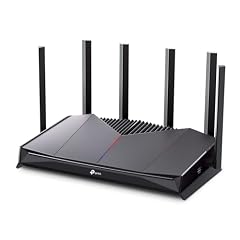
TP-Link Dual-Band BE6500 WiFi 7 Gaming Router 6.5 Gbps
- Wi-Fi standard
- Wi-Fi 7
- Bands
- Dual-band
- Speed class
- 5001 to 10000
- Multi-gig port
- Yes
- Gaming
- Yes
$194.99 (as of 10/26/2026 20:06 PDT - Details)
The TP-Link Archer GE400 is a Wi-Fi 7 gaming router with a 5001 to 10000 Mbps speed class. It is the direct standalone alternative to the ASUS TUF Gaming BE6500 for gamers who prefer a single-unit TP-Link router.
Pros
- Wi-Fi 7 support
- Speed class 5001 to 10000 Mbps
- Gaming use case listed
- Dual-band design
Cons
- No mesh support listed
- No coverage claim stated by the seller
Good fit if
- Gamers who want a standalone Wi-Fi 7 router
- Users who do not need a mesh system
Skip if
- You want mesh support; see the ASUS TUF Gaming BE6500 or a Deco system
- You need a multigig wired port
Verdict: The TP-Link Archer GE400 is the best standalone Wi-Fi 7 gaming alternative in this list.
Comparison table
| # | Router | Wi-Fi standard | Bands | Speed class | Coverage | Pack size | Mesh |
|---|---|---|---|---|---|---|---|
| 1 | Deco 7 Dual-Band BE5000 WiFi 7 Mesh Wi-Fi System 4-Stream 5 Gbps | Wi-Fi 7 | Dual-band | 2001 to 5000 | Over 6,000 sq ft | 3 pack or more | Yes |
| 2 | ASUS TUF Gaming BE6500 WiFi 7 Router | Wi-Fi 7 | Dual-band | 5001 to 10000 | not stated | not stated | Yes |
| 3 | GL.iNet GL-MT3600BE Beryl 7 Dual-Band Wi-Fi 7 Travel Router | Wi-Fi 7 | Dual-band | not stated | not stated | not stated | not stated |
| 4 | Amazon eero Outdoor 7 dual-band mesh wifi system | Wi-Fi 7 | Dual-band | not stated | Over 6,000 sq ft | 2 pack | Yes |
| 5 | ASUS RT-BE59 WiFi 7 Router | Wi-Fi 7 | Dual-band | not stated | not stated | not stated | Yes |
| 6 | TP-Link Dual-Band BE3600 Wi-Fi 7 Router | Wi-Fi 7 | Dual-band | 2001 to 5000 | not stated | not stated | not stated |
| 7 | NETGEAR Nighthawk WiFi 6 Router | Wi-Fi 6 | Dual-band | 2001 to 5000 | Up to 2,000 sq ft | not stated | not stated |
| 8 | Cudy AX3000 5-Port Wi-Fi 6 2.5G Router | Wi-Fi 6 | not stated | 2001 to 5000 | not stated | not stated | Yes |
| 9 | ASUS RT-AX57 GO -AX3000 Dual Band WiFi 6 Portable Travel Router | Wi-Fi 6 | Dual-band | 2001 to 5000 | not stated | not stated | not stated |
| 10 | GL.iNet GL-SFT1200 Opal Travel Router | Wi-Fi 5 | Dual-band | Up to 2000 | not stated | not stated | not stated |
| 11 | Tenda AC1200 Smart WiFi Router | Wi-Fi 5 | Dual-band | Up to 2000 | not stated | not stated | not stated |
| 12 | ASUS AC1900 Wireless Dual Band | Wi-Fi 5 | Dual-band | Up to 2000 | not stated | not stated | not stated |
| 13 | TP-Link AX6000 Wi-Fi 6 Dual Band Router | Wi-Fi 6 | Dual-band | 5001 to 10000 | not stated | not stated | not stated |
| 14 | TP-Link Dual-Band BE6500 WiFi 7 Gaming Router 6.5 Gbps | Wi-Fi 7 | Dual-band | 5001 to 10000 | not stated | not stated | not stated |
How this list was made
The starting pool contains 60 dual-band router listings from the catalogue. We removed near-duplicate listings that repeat the same model in a different pack size or color, then selected 15 that cover the main uses for a dual-band router: standalone, mesh, gaming, travel, outdoor, and multigig wired ports. Each candidate was checked for Wi-Fi generation, speed class, mesh support, coverage claim, travel features, and wired port type as listed in the pool. Prices on the page are live and are read from the product listing at load time; this guide does not compare prices. No unit was tested by this site, so the recommendations are based on the published specifications and on standards and security material from the Wi-Fi Alliance, IEEE, and NIST.
Choosing the right one
What dual-band means
A dual-band router broadcasts two wireless networks: 2.4 GHz and 5 GHz. The 2.4 GHz band is useful for basic devices and for reaching farther through walls, while the 5 GHz band is usually less congested and better for streaming, gaming, and large file transfers. The Wi-Fi Alliance notes that most Wi-Fi 5 products are dual-band and that a dual-band network doubles capacity because devices can use the less crowded 5 GHz band for demanding tasks. On this list, every pick has two bands by definition; the difference between models is the Wi-Fi generation and the feature package around those two bands.
Wi-Fi 5, 6, or 7
Wi-Fi 5 (802.11ac) is the older standard; it still handles everyday browsing and streaming on a basic router. Wi-Fi 6 (802.11ax) adds OFDMA, MU-MIMO, target wake time, and 1024 QAM, which help in homes with many connected devices. Wi-Fi 7 is the newest generation: the Wi-Fi Alliance describes features such as multi-link operation, 4K QAM, and wider channels that improve throughput and reliability. For a dual-band router, the 6 GHz band included in many Wi-Fi 7 products is not available, so the practical upgrades come from the other Wi-Fi 7 features.
Mesh vs standalone
A standalone router is one unit; a mesh system includes two or more units that share one network name. Mesh picks in this list include two-packs and three-packs, and several list coverage ranges in the catalogue. If your home has a dead zone in a back room or on another floor, a mesh system is usually the better fit. If all your devices are close to one router, a standalone model can be simpler to set up and manage.
Wired ports and multigig
The wireless speed class is not the only number that matters. The Ethernet ports set the maximum wired speed. Basic routers in this list are described with Fast Ethernet ports, while most newer models list Gigabit Ethernet. A multigig port, marked multigig in the catalogue, matters if your internet plan is faster than 1 Gbps or if you have a NAS or desktop with a multigig adapter. The ASUS RT-BE59 and the Cudy AX3000 2.5G are the two picks here with multigig support.
Security and privacy
Security does not begin after the router is installed. Wi-Fi CERTIFIED devices include WPA3 and Protected Management Frames, which protect against password guessing and some management frame attacks. NIST publishes small-business and home guidance that covers changing default credentials, enabling encryption, and keeping firmware updated. For home networks, choose a router that lists WPA3, and be careful with open public Wi-Fi when you are traveling; travel routers with public Wi-Fi modes can create a private network from a hotel connection.
Travel and outdoor routers
Dual-band routers are not all indoor boxes. Some travel routers are built to fit in a bag and add features like 4G/5G tethering or public Wi-Fi mode, which allow you to make a hotel or phone connection safer. Outdoor mesh units carry weather protection; the eero Outdoor 7 in this list is designated IP66. If your goal is coverage in a yard or workshop, an outdoor-capable access point or mesh unit is a better choice than a standard indoor router.
Questions
Is a dual-band router enough?
For most homes, yes. Two bands let older smart-home devices use 2.4 GHz while phones, laptops, and streaming boxes use the less crowded 5 GHz band. Tri-band routers add either a second 5 GHz band or a 6 GHz band, which helps in very dense homes with many simultaneous high-bandwidth devices. If your household is not especially dense, a dual-band model is usually enough.
What is the difference between Wi-Fi 6 and Wi-Fi 7 on a dual-band router?
Wi-Fi 6 improves throughput and efficiency with OFDMA, MU-MIMO, and target wake time. Wi-Fi 7 adds multi-link operation and 4K QAM, which can increase throughput and improve reliability. On a dual-band router, you do not get the 6 GHz band that some Wi-Fi 7 products use, so you are relying on the other Wi-Fi 7 features. Wi-Fi 7 is the better long-term choice if you plan to keep the router for several years.
Do I need mesh or a single router?
Start with the size and layout of your home. A single router can be enough in an apartment or a small house, especially if the unit lists a coverage estimate that matches your floor plan. A mesh system uses two or more units to create one network and is designed for homes with dead zones, thick walls, or multiple floors. Several mesh picks in this guide are sold as two-packs or three-packs.
What security features should I look for?
Look for WPA3 support and Protected Management Frames. The Wi-Fi Alliance makes WPA3 mandatory for Wi-Fi CERTIFIED devices, and PMF is required for newly certified devices. You should also change the default admin password, keep firmware updated, and use a separate guest network for visitors. NIST publishes guidance for small businesses and individuals that covers the same basic protections.
Can I use a dual-band router for gaming?
Yes. Gaming does not require a third band; it requires low latency, good throughput, and a stable connection. Several picks in this guide list gaming as a use case, including Wi-Fi 6 and Wi-Fi 7 models. If your gaming setup uses Ethernet, check the wired port speed, because the wireless speed class only applies to Wi-Fi clients.
What changed
- : First published.