
Best Multi-Gig Port Routers in 2026: 15 Picks Compared on Specs
The ASUS RT-BE90U combines a 2.5G WAN with tri-band Wi-Fi 7, a stated 9.4 Gbps rate, and mesh support, making it the lead pick for most homes. We selected the routers below from published specifications and catalog data, then compared port counts, Wi-Fi generation, band layout, and mesh options. Prices shown on the page are live from the listing, not predictions. No unit was tested or measured for this guide.
15 picks from 102 routers that match this guide with a price we can quote today, made by 29 makers. Each price below is read live and stamped with the time it was read.
The short list
Who each pick suits
- For travel and VPN: If you need a small router that fits in a bag, supports OpenWrt, and has a 2.5G WAN for hotel or wired connections, this compact model keeps setup flexible. See pick 13
- For a whole-home Wi-Fi 7 mesh: A three-pack with quad-band Wi-Fi 7 and two 10G ports per unit covers large homes and wired backhaul. See pick 4
- For gaming with low-fuss setup: Pick the ROG gaming model if you want a 10G port and a game boost feature in a single tri-band Wi-Fi 7 router. See pick 3
- For an easier 2.5G upgrade: A dual-band Wi-Fi 7 router with a 2.5G port is enough for many homes that are moving past gigabit internet. See pick 7
The 15 picks, one by one
1 Best overall

ASUS RT-BE90U WiFi 7 Router
- Wi-Fi standard
- Wi-Fi 7
- Bands
- Tri-band
- Coverage
- 2,001 to 4,000 sq ft
- Mesh
- Yes
- Multi-gig port
- Yes
It has a 2.5G WAN, tri-band Wi-Fi 7, a 9.4 Gbps class rate, and mesh support in a single unit. The dual-band RT-BE59 keeps the 2.5G port but adds no third band, so the RT-BE90U covers more wireless capacity without requiring a mesh pack.
Pros
- Tri-band Wi-Fi 7
- 2.5G WAN port
- 9.4 Gbps combined Wi-Fi rate stated by ASUS
- Mesh support for adding nodes later
Cons
- No 10G port stated by the seller
- Single-unit coverage depends on placement
Good fit if
- Homes with gigabit-plus fiber and a mix of Wi-Fi 7 devices
- Those who want a single router with future mesh expansion
Skip if
- You need more than one 2.5G wired LAN port now
- A three-pack mesh will cover a very large floor plan better
Verdict: The RT-BE90U is the best single-hub multi-gig router for most homes.
2 Most 2.5G ports

GL.iNet GL-BE9300 Flint 3 Tri-Band Wi-Fi 7 Router 5 x 2.5G VPN Router
- Wi-Fi standard
- Wi-Fi 7
- Bands
- Tri-band
- Speed class
- 5001 to 10000
- Multi-gig port
- Yes
- Gaming
- Yes
$209.99 (as of 10/26/2026 14:10 PDT - Details)
Among the picks, this is the one with five 2.5G ports, so it can feed a NAS, a desktop, and a gaming console at multi-gig speeds at the same time. It pairs those ports with tri-band Wi-Fi 7 and a VPN router role, which makes it different from gaming-focused models.
Pros
- Five 2.5G ports, the most in this list
- Tri-band Wi-Fi 7
- VPN router support named by GL.iNet
- Single-unit setup without mesh complexity
Cons
- No 10G port stated by the seller
- Tri-band speed class is up to 9300, below the 10G-class mesh systems
Good fit if
- Power users with several wired multi-gig devices
- Those who want VPN router flexibility in one box
Skip if
- You need a 10G WAN for the fastest possible internet plan
- You want a covered mesh system out of the box
Verdict: If wired multi-gig ports matter more than anything else, the Flint 3 is the pick.
3 Best gaming Wi-Fi 7 router

ASUS GT-BE19000AI Tri-Band WiFi 7 AI Gaming Router
- Wi-Fi standard
- Wi-Fi 7
- Bands
- Tri-band
- Coverage
- 2,001 to 4,000 sq ft
- Multi-gig port
- Yes
- Gaming
- Yes
$639.99 (as of 10/26/2026 12:08 PDT - Details)
It is the gaming-specific single unit in the list, with a 10G port and Game Boost named in the listing. Its tri-band Wi-Fi 7 setup and 19000-class rate put it above the Wi-Fi 6 gaming mesh options for raw speed.
Pros
- 10G port stated in the listing
- Tri-band Wi-Fi 7
- Game Boost feature for traffic prioritization
- Gaming-focused line from ASUS
Cons
- Single-unit form, no mesh pack
- No travel or compact form factor
Good fit if
- Competitive gamers with a 10G-capable PC or console
- Users who want a gaming traffic feature without a mesh system
Skip if
- You need to cover multiple floors with one system
- You prefer a smaller travel-friendly form factor
Verdict: For a dedicated gaming hub with a 10G port, the GT-BE19000AI is the strongest match.
4 Best whole-home coverage

ASUS ZenWiFi BQ16 Pro Quad-Band WiFi 7 Mesh Router
- Wi-Fi standard
- Wi-Fi 7
- Bands
- Quad-band
- Coverage
- Over 6,000 sq ft
- Pack size
- 3 pack or more
- Mesh
- Yes
- Multi-gig port
- Yes
$1,865.24 (as of 10/26/2026 12:09 PDT - Details)
This is the highest-coverage mesh pick in the pool: a three-pack with a claimed 12,000 sq ft range and two 10G ports on each unit. The quad-band layout gives it an extra radio to handle many devices at once.
Pros
- Three-pack mesh for up to 12,000 sq ft stated by ASUS
- Two 10G ports per unit
- Quad-band Wi-Fi 7
- Coverage figure is the highest in this list
Cons
- Larger physical setup than a single hub
- No travel or compact form factor
Good fit if
- Large homes with wired Ethernet backhaul available
- Households with many Wi-Fi 7 clients and 10G network storage
Skip if
- You only need one multi-gig router near the modem
- You want the smallest possible installation
Verdict: For whole-home coverage and 10G wired capacity, the BQ16 Pro three-pack leads the list.
5 Best 10G mesh system

TP-Link Deco 7 Pro BE63 Tri-Band WiFi 7 BE10000 Whole Home Mesh System
- Wi-Fi standard
- Wi-Fi 7
- Bands
- Tri-band
- Speed class
- 5001 to 10000
- Coverage
- Over 6,000 sq ft
- Pack size
- 3 pack or more
- Mesh
- Yes
- Multi-gig port
- Yes
$626.49 (as of 10/26/2026 20:06 PDT - Details)
A three-pack with tri-band Wi-Fi 7, a 10 Gbps class throughput, and up to 9,300 sq ft of claimed coverage makes this a strong all-wireless mesh alternative. It competes with the ZenWiFi BT10 but uses a six-stream layout and a different coverage figure.
Pros
- Three-pack mesh for up to 9,300 sq ft stated by TP-Link
- Tri-band Wi-Fi 7 with 10 Gbps class throughput
- 6-stream layout for dense homes
- Complete three-unit system
Cons
- No outdoor unit included
- Coverage area is lower than the BQ16 Pro's 12,000 sq ft in this list
Good fit if
- Large homes with a 10G or multi-gig internet plan
- Users who want a complete mesh instead of one powerful router
Skip if
- You need a 10G wired port count above what the three-pack provides
- You want a travel or single compact router
Verdict: The Deco 7 Pro BE63 is the best three-pack mesh for combining 10G-class Wi-Fi with broad coverage.
6 Best mesh with dual 10G per unit
ASUS ZenWiFi BT10 WiFi 7 Mesh Router
- Wi-Fi standard
- Wi-Fi 7
- Bands
- Tri-band
- Pack size
- 3 pack or more
- Mesh
- Yes
- Multi-gig port
- Yes
$987.09 (as of 10/26/2026 12:09 PDT - Details)
The BT10 three-pack gives each unit two 10G ports, so wired backhaul and a 10G NAS can connect directly. It covers 9,000 sq ft with tri-band Wi-Fi 7, which makes it a fully wired alternative to the BQ16 Pro.
Pros
- Two 10G ports on each of three units
- Tri-band Wi-Fi 7
- Mesh coverage up to 9,000 sq ft stated by ASUS
- Ideal for 10G wired backhaul
Cons
- Quad-band BQ16 Pro covers more area in this list
- No outdoor unit in the pack
Good fit if
- Homes with 10G Ethernet backhaul in each room
- Users who need 10G wired ports at both router and node locations
Skip if
- You can rely on a single router and do not need mesh nodes
- You need more than 9,000 sq ft of stated coverage from the pack
Verdict: For a mesh that puts 10G ports at every node, the ZenWiFi BT10 is the clearest choice.
7 Best dual-band Wi-Fi 7 upgrade

ASUS RT-BE59 WiFi 7 Router
- Wi-Fi standard
- Wi-Fi 7
- Bands
- Dual-band
- Mesh
- Yes
- Multi-gig port
- Yes
$179.99 (as of 10/26/2026 12:09 PDT - Details)
This is the simplest Wi-Fi 7 router in the list: dual-band, 5 Gbps class, a 2.5G port, and mesh compatibility. It is a good match for homes that want one 2.5G WAN port without adding a tri-band radio.
Pros
- Dual-band Wi-Fi 7
- 5 Gbps combined Wi-Fi rate stated by ASUS
- 2.5G port
- Mesh compatible with other ASUS routers
Cons
- Only dual-band, so no dedicated 6 GHz backhaul radio for mesh
- No stated 10G port
Good fit if
- Homes moving from gigabit to a 2.5G internet plan
- Users who want Wi-Fi 7 without a large mesh system
Skip if
- You need more than one multi-gig wired LAN port
- You want a tri-band or quad-band setup for very dense use
Verdict: The RT-BE59 covers the essential 2.5G plus Wi-Fi 7 upgrade path in a single device.
8 Best indoor/outdoor Wi-Fi 7 mesh

TP-Link Deco 7 Pro Mesh Bundle
- Wi-Fi standard
- Wi-Fi 7
- Coverage
- Over 6,000 sq ft
- Pack size
- 3 pack or more
- Mesh
- Yes
- Multi-gig port
- Yes
$546.46 (as of 10/26/2026 20:06 PDT - Details)
This bundle combines three BE10000 tri-band indoor units with one BE5000 outdoor unit, so it can cover a yard or patio while keeping the indoor network at 10 Gbps class. It is the only pick here with an outdoor node in the pack.
Pros
- Four-unit bundle with three BE10000 indoor units
- Includes one BE5000 outdoor unit
- Covers over 6,000 sq ft as stated in the listing
- Tri-band Wi-Fi 7 indoor nodes
Cons
- No per-unit 10G port count stated in the listing
- Four physical units to place
Good fit if
- Homes with outdoor Wi-Fi needs on a patio, yard, or outbuilding
- Users who want one system for indoor and outdoor coverage
Skip if
- You only need indoor coverage from a simple three-pack
- You want 10G wired ports on every node
Verdict: With an outdoor node included, this Deco bundle is the pick for mixed indoor/outdoor multi-gig mesh.
9 Best dual-band mesh with outdoor node

TP-Link Deco 7 Mesh Bundle
- Wi-Fi standard
- Wi-Fi 7
- Bands
- Dual-band
- Speed class
- 2001 to 5000
- Coverage
- Over 6,000 sq ft
- Pack size
- 3 pack or more
- Mesh
- Yes
- Multi-gig port
- Yes
$358.69 (as of 10/26/2026 20:06 PDT - Details)
A three-pack of BE5000 dual-band indoor units plus one BE5000 outdoor unit gives broad coverage with a simpler node design than the tri-band Pro bundle. It keeps the outdoor coverage feature but uses dual-band Wi-Fi 7 nodes.
Pros
- Four-unit bundle with three BE5000 indoor units
- Includes one BE5000 outdoor unit
- Covers up to 9,000 sq ft stated in the listing
- All nodes are Wi-Fi 7
Cons
- Dual-band nodes, so no dedicated third radio for backhaul
- No 10G-class speed is indicated in the model name
Good fit if
- Users who want outdoor coverage without a 10G-class indoor system
- Homes with mostly dual-band Wi-Fi 7 clients
Skip if
- You need tri-band or 10G performance for multi-gig NAS transfers
- You want fewer than four units to place
Verdict: For outdoor coverage with a simpler dual-band setup, this Deco 7 mesh bundle is hard to beat.
10 Best gaming Wi-Fi 6 router

GL.iNet GL-MT6000 Flint 2 Wi-Fi 6 Gaming Router Dual 2.5G Ports
- Wi-Fi standard
- Wi-Fi 6
- Multi-gig port
- Yes
- Gaming
- Yes
$169.99 (as of 10/26/2026 14:10 PDT - Details)
The Flint 2 is the only Wi-Fi 6 gaming router in the list with two 2.5G ports, so it can handle a multi-gig WAN and a wired gaming PC at the same time. It also keeps the single-router simplicity of the GL.iNet line.
Pros
- Two 2.5G ports, named in the listing
- Wi-Fi 6 gaming router
- Gaming use case named by GL.iNet
- Single-router setup without mesh complexity
Cons
- Wi-Fi 6, so no 6 GHz band from Wi-Fi 7 in this comparison
- No mesh pack included
Good fit if
- Gamers with a 2.5G fiber plan and a wired PC
- Users who prefer Wi-Fi 6 for device compatibility
Skip if
- You want the newest Wi-Fi 7 features
- You need a mesh system instead of a single router
Verdict: The Flint 2 is the right multi-gig router if your priority is Wi-Fi 6 gaming with two 2.5G ports.
11 Best travel router with touchscreen

GL.iNet GL-BE3600 Slate 7 Wi-Fi 7 Travel Router Touchscreen 2.5G
- Wi-Fi standard
- Wi-Fi 7
- Speed class
- 2001 to 5000
- Multi-gig port
- Yes
- Travel
- Yes
$159.99 (as of 10/26/2026 14:10 PDT - Details)
This is the only pick with a touchscreen and Wi-Fi 7 in a travel body. It has a 2.5G port and a compact form factor, which makes it more capable than the older Wi-Fi 6 travel options here.
Pros
- Touchscreen interface, unique in this list
- Wi-Fi 7 travel router
- 2.5G port
- Compact travel form factor stated by GL.iNet
Cons
- Only one 2.5G port stated
- No mesh pack or replaceable antennas
Good fit if
- Travelers who want the latest Wi-Fi standard in a small router
- People who like a screen for quick status checks
Skip if
- You need wired multi-gig ports for home network storage
- You want a full mesh system for whole-home coverage
Verdict: The Slate 7 is the best travel-oriented multi-gig router for Wi-Fi 7 enthusiasts.
12 Best travel Wi-Fi 7 router with USB

Roam 7 BE3600 Wi-Fi 7 Portable Travel Router Dual-Band
- Wi-Fi standard
- Wi-Fi 7
- Bands
- Dual-band
- Speed class
- 2001 to 5000
- Multi-gig port
- Yes
- Travel
- Yes
$87.99 (as of 10/26/2026 19:05 PDT - Details)
The Roam 7 is a portable travel router with dual-band Wi-Fi 7, a 2.5G port, and USB 3.0. It is the simplest travel pick that still supports the current Wi-Fi generation and adds a USB port for storage or sharing.
Pros
- Portable travel form factor
- Wi-Fi 7 dual-band
- 2.5G port
- USB 3.0 port for storage or sharing
Cons
- Dual-band only
- No touchscreen or display
Good fit if
- Mobile workers who need Wi-Fi 7 in hotels and short-term rentals
- Travelers who want a wired 2.5G uplink from a portable router
Skip if
- You need a home mesh system
- You want a router with an integrated display
Verdict: For a compact Wi-Fi 7 travel router with a 2.5G port and USB, the Roam 7 is the clear choice.
13 Best compact travel router

GL.iNet GL-MT3000 Beryl AX Wi-Fi 6 Travel Router
- Wi-Fi standard
- Wi-Fi 6
- Bands
- Dual-band
- Multi-gig port
- Yes
- Travel
- Yes
$98.99 (as of 10/26/2026 14:10 PDT - Details)
The Beryl AX is a Wi-Fi 6 travel router with a 2.5G WAN, VPN support, and OpenWrt, all in a small case. It is the most fully featured compact travel router in the list, though it does not have Wi-Fi 7.
Pros
- 2.5G WAN port
- Wi-Fi 6
- VPN support and OpenWrt named by GL.iNet
- Travel-focused compact design
Cons
- Wi-Fi 6, not Wi-Fi 7
- No touchscreen, unlike the Slate 7
Good fit if
- Travelers who need VPN client features in a small router
- Users who want OpenWrt flexibility in a portable device
Skip if
- You need Wi-Fi 7 features
- You want a home mesh router rather than a travel device
Verdict: The Beryl AX remains the best compact travel router for wired multi-gig uplinks and VPN use.
14 Best standalone 2.5G WAN router

Cudy AX3000 5-Port Wi-Fi 6 2.5G Router
- Wi-Fi standard
- Wi-Fi 6
- Speed class
- 2001 to 5000
- Mesh
- Yes
- Multi-gig port
- Yes
$69.99 (as of 10/26/2026 13:08 PDT - Details)
This is the simplest way into a 2.5G WAN: a dual-band Wi-Fi 6 router with a 2.5G port, four gigabit LAN ports, and OpenWrt support. It covers the essential multi-gig wired handoff without adding Wi-Fi 7 or mesh radios.
Pros
- 2.5G WAN for multi-gig internet plans
- Four gigabit LAN ports
- 160MHz channel support stated in the listing
- OpenWrt support named by Cudy
Cons
- Wi-Fi 6, so no 6 GHz band from Wi-Fi 7
- Dual-band layout only
Good fit if
- Users with a 2.5G fiber plan who do not need extra radios
- People who want a small OpenWrt router and already have access points
Skip if
- You need Wi-Fi 7 features
- You want a mesh system from one box
Verdict: If you only need a 2.5G WAN handoff and do not need Wi-Fi 7, the Cudy AX3000 is the most direct pick.
15 Best gaming mesh system
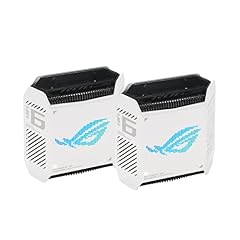
ASUS ROG Rapture GT6
- Wi-Fi standard
- Wi-Fi 6
- Bands
- Tri-band
- Coverage
- 4,001 to 6,000 sq ft
- Pack size
- 2 pack
- Mesh
- Yes
- Multi-gig port
- Yes
- Gaming
- Yes
$499.99 (as of 10/26/2026 12:08 PDT - Details)
The GT6 two-pack is the only gaming mesh in this list, pairing tri-band Wi-Fi 6 with a 2.5 Gbps port and coverage up to 5,800 sq ft. It trades Wi-Fi 7 and 10G speeds for a complete gaming mesh package.
Pros
- Two-pack mesh system
- Tri-band Wi-Fi 6
- 2.5 Gbps port named in the listing
- Gaming-specific ROG feature set
Cons
- Wi-Fi 6, so no 6 GHz Wi-Fi 7 support
- 2.5G port, not 10G
Good fit if
- Gamers who need whole-home coverage from two nodes
- Users who prefer a ROG gaming interface
Skip if
- You want the latest Wi-Fi 7 and 10G hardware
- You need a single compact router
Verdict: For gamers who want mesh coverage and a 2.5G uplink, the ROG Rapture GT6 two-pack is the focused choice.
Comparison table
| # | Router | Wi-Fi standard | Bands | Speed class | Coverage | Pack size | Mesh |
|---|---|---|---|---|---|---|---|
| 1 | ASUS RT-BE90U WiFi 7 Router | Wi-Fi 7 | Tri-band | not stated | 2,001 to 4,000 sq ft | not stated | Yes |
| 2 | GL.iNet GL-BE9300 Flint 3 Tri-Band Wi-Fi 7 Router 5 x 2.5G VPN Router | Wi-Fi 7 | Tri-band | 5001 to 10000 | not stated | not stated | not stated |
| 3 | ASUS GT-BE19000AI Tri-Band WiFi 7 AI Gaming Router | Wi-Fi 7 | Tri-band | not stated | 2,001 to 4,000 sq ft | not stated | not stated |
| 4 | ASUS ZenWiFi BQ16 Pro Quad-Band WiFi 7 Mesh Router | Wi-Fi 7 | Quad-band | not stated | Over 6,000 sq ft | 3 pack or more | Yes |
| 5 | TP-Link Deco 7 Pro BE63 Tri-Band WiFi 7 BE10000 Whole Home Mesh System | Wi-Fi 7 | Tri-band | 5001 to 10000 | Over 6,000 sq ft | 3 pack or more | Yes |
| 6 | ASUS ZenWiFi BT10 WiFi 7 Mesh Router | Wi-Fi 7 | Tri-band | not stated | not stated | 3 pack or more | Yes |
| 7 | ASUS RT-BE59 WiFi 7 Router | Wi-Fi 7 | Dual-band | not stated | not stated | not stated | Yes |
| 8 | TP-Link Deco 7 Pro Mesh Bundle | Wi-Fi 7 | not stated | not stated | Over 6,000 sq ft | 3 pack or more | Yes |
| 9 | TP-Link Deco 7 Mesh Bundle | Wi-Fi 7 | Dual-band | 2001 to 5000 | Over 6,000 sq ft | 3 pack or more | Yes |
| 10 | GL.iNet GL-MT6000 Flint 2 Wi-Fi 6 Gaming Router Dual 2.5G Ports | Wi-Fi 6 | not stated | not stated | not stated | not stated | not stated |
| 11 | GL.iNet GL-BE3600 Slate 7 Wi-Fi 7 Travel Router Touchscreen 2.5G | Wi-Fi 7 | not stated | 2001 to 5000 | not stated | not stated | not stated |
| 12 | Roam 7 BE3600 Wi-Fi 7 Portable Travel Router Dual-Band | Wi-Fi 7 | Dual-band | 2001 to 5000 | not stated | not stated | not stated |
| 13 | GL.iNet GL-MT3000 Beryl AX Wi-Fi 6 Travel Router | Wi-Fi 6 | Dual-band | not stated | not stated | not stated | not stated |
| 14 | Cudy AX3000 5-Port Wi-Fi 6 2.5G Router | Wi-Fi 6 | not stated | 2001 to 5000 | not stated | not stated | Yes |
| 15 | ASUS ROG Rapture GT6 | Wi-Fi 6 | Tri-band | not stated | 4,001 to 6,000 sq ft | 2 pack | Yes |
How this list was made
We started with the 17 multi-gig routers in the catalog pool, then narrowed the list to 15 by removing a near-duplicate two-pack of a travel model. The shortlist criteria were: the listing had to name at least one port above 1 Gbps, and it had to state the Wi-Fi generation or a clear use case such as travel, gaming, or mesh. We favored models from established brands by default and did not include renewed or reseller configurations. We compared 2.5G versus 10G port count, Wi-Fi 6 versus Wi-Fi 7, mesh pack size, travel features, and security generation. No router was tested, benchmarked, or handled. Every spec in the comparison comes from the maker's listing, and the prices printed with each pick are read live from the page.
Choosing the right one
What a multi-gig port actually does
Multi-gig means the wired Ethernet port is capable of more than 1 Gbps. On a router, a 2.5G port is the most common way to accept a fiber connection that is faster than gigabit, while 10G ports matter when you also have a NAS, a desktop, or a mesh backhaul that can use that speed. If your internet plan is still under 1 Gbps, the port speed alone will not raise your plan speed; it removes the router as the bottleneck for local transfers and future upgrades.
2.5G versus 10G wired ports
2.5G ports are now common and are enough for many multi-gig plans because plans typically stop at 2.5G or 5G. A 10G port is useful when you have a 10G-capable NAS, a 10G fiber plan, or you want to future-proof wired backhaul between mesh nodes. Check the number of multi-gig ports too: a single 2.5G WAN port is not the same as a router with several 2.5G LAN ports for wired clients.
Wi-Fi 6 versus Wi-Fi 7
The Wi-Fi Alliance describes Wi-Fi 7 as supporting 320 MHz channels in the 6 GHz band, multi-link operation, and 4K QAM, which together can provide multigigabit device speeds. Wi-Fi 6 introduced 160 MHz channels, OFDMA, and improved efficiency in dense environments. If you have newer phones and laptops, a Wi-Fi 7 router makes better use of a multi-gig connection; if your devices are mostly Wi-Fi 6, a 2.5G Wi-Fi 6 router can still remove the wired bottleneck.
Mesh packs versus a single router
A single multi-gig router is enough when your home is small and the modem is centrally placed. A three-pack mesh is better for large homes because each node adds coverage and can use wired Ethernet backhaul if available. In this list, mesh picks range from two-unit gaming systems to three- and four-unit Wi-Fi 7 bundles with outdoor nodes.
Security and VPN support
Modern Wi-Fi CERTIFIED devices include WPA3 security, which the Wi-Fi Alliance lists as mandatory for certification. If you travel or use public networks, a router with VPN support can keep your traffic inside an encrypted tunnel; several GL.iNet picks in this list name VPN support or OpenWrt directly in the listing. When you connect a router to a hotel or office network, change the default admin password and use WPA2 or WPA3 for your private Wi-Fi.
Questions
What is a multi-gig port router?
A multi-gig port router has at least one Ethernet port capable of more than 1 Gbps, usually 2.5G, 5G, or 10G. These ports are used for the WAN connection from a fiber modem or for wired LAN devices such as NAS units and desktop computers. The key benefit is that the router does not become a bottleneck when your internet plan or local network runs above gigabit speed.
Do I need a multi-gig router if my internet plan is under 1 Gbps?
Not for the internet speed itself. A 1 Gbps router can already handle most plans below gigabit. A multi-gig port can still help for local transfers, such as moving files to a NAS or backing up a desktop over a wired connection. If you plan to upgrade to a faster fiber plan later, a 2.5G router gives you room to grow without replacing the router.
What is the difference between 2.5G and 10G ports?
2.5G is the most common multi-gig port speed on home routers and matches many fiber plans. 10G is four times faster and is useful for high-speed NAS transfers, 10G wired backhaul between mesh nodes, or future internet plans. For most households, one or two 2.5G ports are enough. A 10G port becomes valuable when you already have 10G devices or very fast local storage.
Can a multi-gig router make Wi-Fi faster?
A multi-gig router can remove a bottleneck, but the Wi-Fi speed still depends on the router's radio generation and the client device. A Wi-Fi 7 router with a 2.5G port can deliver multigigabit speeds to compatible devices, according to Wi-Fi Alliance features such as 320 MHz channels and multi-link operation. Older Wi-Fi 5 or Wi-Fi 6 clients will not reach those speeds just because the wired port is faster.
How many multi-gig ports do I need?
Start with the WAN port, because that is where your modem or ONT connects. If you also have a NAS, a gaming PC, or a mesh backhaul that supports multi-gig, look for at least two multi-gig ports. Routers with five 2.5G ports, like the GL.iNet Flint 3 in this list, suit users with several wired multi-gig devices.
What changed
- : First published.